


Why a coach needs more than one opening in the roof
A coach is a long, low room with fifty people in it, and the air inside behaves like the air in any long room. It warms, it rises and it collects at the far end from wherever the fresh air comes in. On a standing coach in summer the back rows are noticeably warmer than the driver's seat, because the driver has the windscreen demister and the door, and the back rows have neither.
Air conditioning helps when the engine is running, but a great deal of a coach's life is spent stationary with the engine off. Waiting at a school, parked at a service area, loading at a ferry port. That is when roof hatches do their work. They are the cheapest and most reliable way to let hot air out of the top of the vehicle and to bring fresh air in without a compressor.
The classic mistake is to fit a single hatch in the middle of the roof and call it done. One opening lets air out only if air can get in somewhere else, and on a closed-up coach it usually cannot. Two hatches, one forward and one aft, give you an inlet and an outlet, and that is where passenger comfort begins.
Two hatches per coach: one for the driver, one for the rear
The forward hatch sits above or just behind the driver's position. It clears the heat that builds up under the windscreen, it gives the driver fresh air without opening the door, and in the ventilation position it starts a flow of air that runs the length of the saloon. On a full-size coach we normally suggest the electric 970 by 530 mm hatch here, because the driver can operate it from the seat without reaching up.
The rear hatch is the one passengers notice. Placed over the last third of the saloon, it lets the warm air that has drifted backwards escape, and on the move it draws a steady stream of air through the vehicle. Set one hatch to scoop and the other to extract and the coach ventilates itself at road speed without a fan running.
On a mid-size coach or a large minibus, a pair of 530 by 530 mm manual hatches does the same job at lower cost. Manual hatches are simpler and have less to go wrong. The trade-off is that the driver has to leave the seat to adjust the front one, which in practice means it gets adjusted less often.
Emergency exits and glazed hatches
Roof hatches on coaches are rarely just about air. The larger 970 by 530 mm hatch is designed as an emergency exit, with a release on the inside so that the opening can be used in an evacuation. Whether a particular vehicle needs a roof exit, and how many, depends on its seating capacity and the rules that apply where it is registered, so check with your certifying body before you cut the roof. What we can tell you is that the hatch itself is built for the purpose, which is not true of every leisure-vehicle hatch on the market.
Glazing is the other consideration. A hatch with a glass panel to ECE 43R lets daylight into a saloon that can otherwise feel like a corridor, and it makes the vehicle feel roomier from the passenger's seat. Glass also does not craze or go milky in strong sun the way some acrylic panels do after a few summers. If the coach will spend its life on the Mediterranean coast, glass is the sensible choice.
The ventilation position: how a hatch breathes when it is not fully open
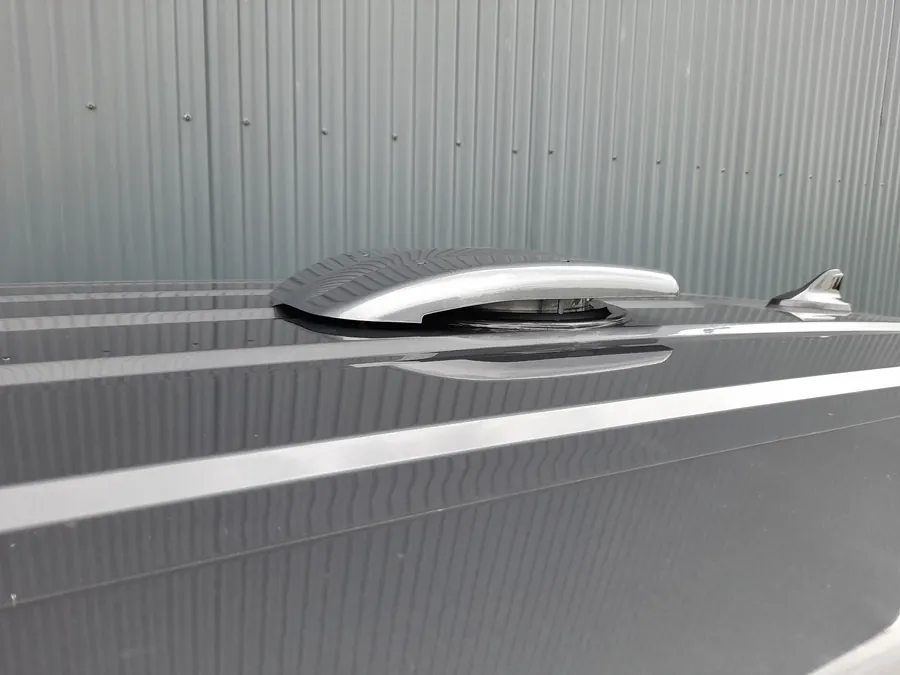
Most people think of a hatch as open or shut. On most coach hatches the useful setting is the third one, the ventilation position, where the hatch lifts a few centimetres and leaves a gap all round. In this position the hatch is usually weather-resistant enough to leave open in light rain, it does not whistle at speed, and it still moves a useful volume of air. It is the setting a coach should be in for most of its working day.
Where the hatch can be raised at the front edge or the rear edge, the choice matters. A raised leading edge catches the airflow over the roof and pushes air down into the saloon. A raised trailing edge sits in the low pressure behind it and pulls air out. So the forward hatch is usually set to scoop and the rear one to extract, though on a hot, stationary coach it makes sense to open both fully and let convection do the work.
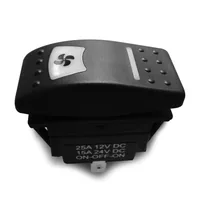
Electric hatches make this practical. With a control unit wired to a switch at the driver's position, the hatch can be moved between closed, ventilation and open without anyone leaving their seat, and closed again before the coach goes through the wash.
Adding a powered roof fan for standing traffic
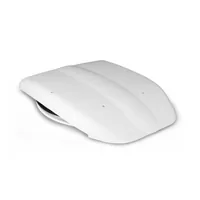
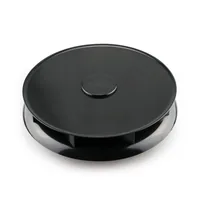
Hatches move air when the coach moves or when the sun is doing the pushing. On a still, humid evening with a full load waiting at the kerb, they need help. A rooftop extractor fan over the rear of the saloon solves it. The Le Mans moves up to 850 cubic metres of air an hour through a 230 mm cut-out, which is a considerable volume for a coach saloon, and with the front hatch set to scoop it turns the whole vehicle into a duct.
Where the coach is used for school runs or airport shuttles with a lot of door-open, door-shut cycles, the fan on a low setting keeps the air fresh between stops. On a full-day tour it can be run on high while the passengers are off visiting a cathedral, so that they come back to a cool coach rather than a hot one. Wire it through a speed controller rather than a plain switch. The low setting is the one that gets used most, and a fan that can only run flat out gets switched off.
Minibuses, midi coaches and conversions
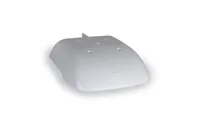
Smaller vehicles have the same problem in a smaller box, and it gets worse rather than better, because there are fewer cubic metres of air per passenger. A sixteen-seat minibus benefits enormously from a single 530 by 530 mm hatch over the rear seats, set to the ventilation position, working with the vehicle's own front vents. If the roof is too low or too curved for a hatch, a compact rooftop ventilator such as the Winglet, which needs only an 80 mm cut-out, can be fitted over the rear seats instead.
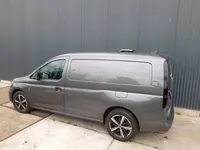
Conversions built on van chassis for wheelchair transport or community use are a case on their own. Passengers who cannot easily move away from a draught, or who spend a long time waiting at the kerb, are more sensitive to a stuffy cabin than most. A closable interior valve near the seating and a hatch above it is a small addition that operators tell us gets noticed by the people who ride every day.
Putting it together
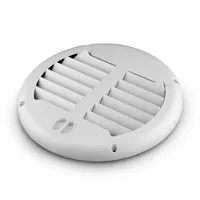
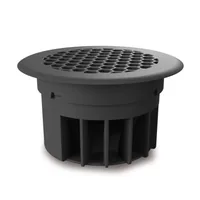
For a full-size coach the sensible starting point is two hatches, electric at the front, electric or manual at the rear, with a powered extractor if the vehicle spends long periods stationary with passengers aboard. Everything that goes with it, the switch, the interior valve and the floor inlet, can be added on the product page with photos and prices alongside, so it all arrives in one order. The buses and coaches page covers the rest of the range, including interior grilles and lighting.
Roof structure varies a great deal between coach builders, so if you are retrofitting rather than specifying a new build, send us the roof thickness and the spacing of the roof bows and we will tell you which hatch frames will sit properly. As an independent European specialist we hold stock in the Netherlands and ship across the continent.
Frequently asked
How many roof hatches does a coach need?
As a rule of thumb, two: one forward near the driver and one over the rear third of the saloon. One acts as an inlet and the other as an outlet, which a single hatch cannot do on its own. Your certifying body will tell you whether any of them must be emergency exits.
Can a roof hatch be used as an emergency exit?
The 970 by 530 mm hatch is designed as an emergency exit with an inside release. Whether your vehicle requires one depends on its capacity and where it is registered, so check before fitting.
Can I leave the hatch open in the rain?
In the ventilation position, where the hatch lifts a few centimetres all round, light rain is usually not a problem. Fully open, close it. An electric hatch with a control unit makes closing it from the driver's seat a matter of seconds.
Is an electric hatch worth it over a manual one?
At the front, yes, because the driver can adjust it from the seat and will actually use it. At the rear a manual hatch is perfectly adequate on most coaches, and it is simpler to maintain.