







Why a camper bedroom is the hardest room to ventilate
Two adults asleep in a camper give off a surprising amount of water vapour over a night. Add the damp from an evening shower, a couple of wet towels and a dog curled up by the door, and you have a small, well-insulated box full of warm, moist air. Warm air holds that moisture happily until it touches something cold. In a camper that is the window frames, the roof lining and the back of the wardrobe. By morning it has condensed, and you wake up to streaming glass and a mattress that feels heavier than it should.
The instinct is to crack a window, and on a mild night that helps a little. The trouble is that a single opening does very little on its own. Air needs a way in and a way out, and it needs a small but steady push to keep moving. Most of the campers we talk to owners about have plenty of ways to let air in and almost nothing that pulls it out.
That is the whole job at night: gentle, continuous extraction at the highest point of the sleeping area, matched with a controlled inlet at the far end. Get those two things right and the bedroom stays cool in summer and dry in winter, without the noise or the draught that puts people off leaving anything open.
The quiet option: a brushless roof fan you can sleep under
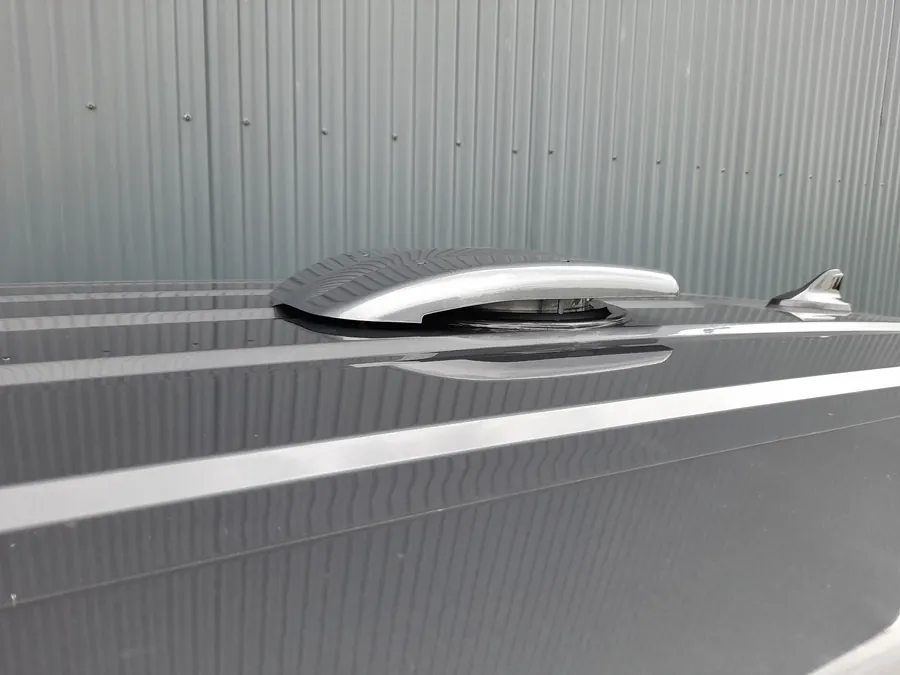
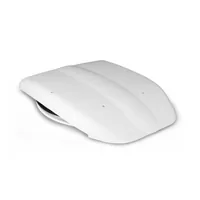
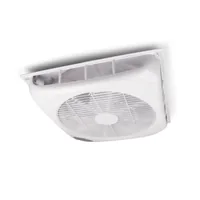
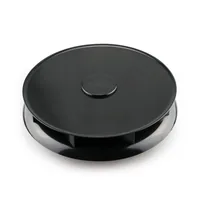
The single most useful upgrade for a camper bedroom is a rooftop ventilator that you can leave running while you sleep. That rules out anything that hums or ticks over your head. The Le Mans LL uses a brushless motor, which is the reason it has become our usual recommendation for the sleeping end of a motorhome. At low speed it is close to silent, and at full output it moves between 515 and 565 cubic metres of air an hour while drawing around 34 watts.
That low draw matters more than it sounds. Left on a low setting through the night, the fan barely registers on a leisure battery, so you are not choosing between fresh air and a working fridge in the morning. On a warm evening it also lets you run the fan on high for twenty minutes before bed to flush the day's heat out of the roof space, then turn it down to a whisper.
The roof cut-out is 230 mm, the same as the standard Le Mans and the Round, so if you already have one of those fitted, the LL is a straightforward swap without touching the roof.
Where the fresh air comes in: a valve you can close
Extraction only works if replacement air can get in, and where it gets in decides whether you feel a draught. A window left open beside the bed puts cold air straight onto your shoulder. A better arrangement is an interior valve on the opposite side of the vehicle, low down or at least well away from the pillows, so the fresh air crosses the whole living space before it reaches the fan.
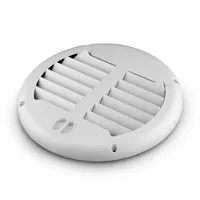
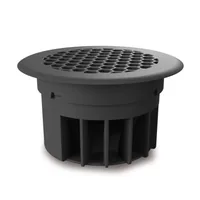
A closable valve such as the V12 gives you that control. Open it fully on a summer night, close it to a slit when the temperature drops, and shut it completely when you are parked on a busy aire and would rather not hear the neighbours. The Flower Power valve does the same job with a rotating shutter, and a plain grille works where you never need to close it, for example between the cab and the living area.
As a rule of thumb, aim for the inlet to be at least a couple of metres from the extractor, and never directly below it. Air takes the shortest route it can, and you want it to take the long way round.
Setting up for a summer night
On a hot evening the routine is simple. Open the roof fan and run it on high while you cook and eat, with the door and windows open. Once the sun is off the roof, close the windows, leave the interior valve open, and drop the fan to low. The fan pulls the cooler night air through the inlet and across the bed, and the constant slight movement makes a big difference to how the temperature feels, even if the thermometer barely moves.
If you have a rear bedroom and the fan is above the lounge, you can still make it work. Leave the bedroom door open and crack the bedroom window a finger's width so the air path runs from the bedroom to the lounge. The fan does not care where the air starts, only that it has a path.
A speed controller within reach of the bed is worth its place. Being able to nudge the fan down at two in the morning without getting up is the difference between a fan that runs all night and one that gets switched off and forgotten.
Winter: the snow filter and the damp problem
Ventilation is not a summer subject. In winter the moisture load in a camper is higher, because you cook and dry clothes inside and every window stays shut. This is when condensation does real damage, soaking into the roof board and the lining, and it is when a low-speed extractor earns its keep. A fan ticking over on its lowest setting all night moves the damp air out before it can settle.
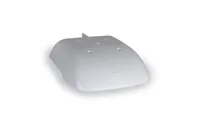
The complication is snow. Driven snow and sleet find their way into a roof ventilator's housing, block the blades and melt into the vehicle. A snow filter is the simple answer. It fits inside the housing, keeps the snow out and still lets the fan breathe. If you ski from the van or spend winters in the mountains, fit one before the season and take it out in spring.
Keep the interior valve open a little even in cold weather. It feels counter-intuitive to let cold air in, but the alternative is a fan with nothing to pull and a bedroom that stays damp. A small inlet, well away from the bed, costs you almost nothing in heat.
Controls and wiring that let you sleep
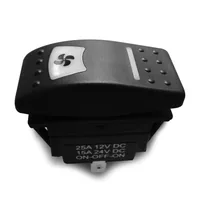
A bedroom fan needs a switch you can find in the dark and a control you can adjust without a torch. Fit the fan switch and the speed control together on a panel near the bed rather than at the habitation door. Keep the wiring run short and use a fused feed from the leisure battery. A roof fan is a modest load, but a poor connection is where trouble starts.
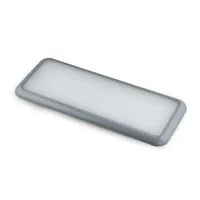
If the ventilator has a built-in light, wire the light on its own switch. Having the lamp come on every time you want air is exactly the kind of small annoyance that ends with the fan being left off. The same goes for any fan that shares a switch with the water pump or the step; give it its own circuit and its own switch.
Putting it together
For most campers the recipe is a brushless roof fan over the sleeping area, a closable interior valve at the far end, a speed control by the bed and a snow filter for winter. Everything that goes with it, the switch, the interior valve and the floor inlet, can be added on the product page with photos and prices alongside, so it all arrives in one order. For an overview of what suits different layouts, from panel van conversions to A-class motorhomes, have a look at our camper ventilation page.
As an independent European specialist we keep everything on this page in stock in the Netherlands, and we talk to fitters and owners about roof cut-outs every week. If you are unsure about roof thickness, cut-out position or wiring, send us a photo of the roof and we will tell you what fits.
Frequently asked
Is a roof fan too noisy to sleep under?
A conventional roof fan on high can be, which is why we suggest a brushless unit such as the Le Mans LL for the bedroom. On its low setting it is close to silent, and most people find it easier to sleep with a gentle airflow than without one.
Do I have to leave a window open at night?
No. A closable interior valve at the far end of the vehicle gives the fan the inlet it needs without an open window beside the bed. It is more secure, quieter and easier to adjust.
Will running the fan all night flatten my leisure battery?
A brushless fan draws around 34 watts at full output and a great deal less on low. Ticking over on low for a night is a small load for a healthy leisure battery. If you are in doubt, run it on the lowest setting that keeps the windows clear.
What size hole do I need in the roof?
The Le Mans, Le Mans LL and Round all use a 230 mm cut-out, so they can be swapped for one another. The compact Winglet needs only 80 mm.