





Ventilation without a single wire
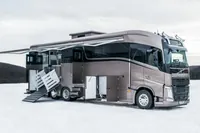
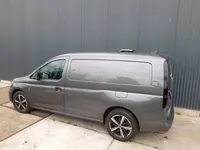
Not every vehicle needs a motor on the roof. Many of the vans, trailers and box bodies we supply are either moving or empty: a tool van, a courier van, a horse trailer occupied only on the road, a refrigerated body. For those, a powered fan spends money and battery capacity on a problem that does not exist, and a wind-driven or passive ventilator does the job for nothing every time the vehicle moves.
We stock three such units. The Turbo II is the full-size rotating cowl, the classic mushroom vent refined with ball bearings and UV-stabilised plastic. The Turbo III is its compact little brother on an 80 mm hole. The exhaust ventilator has no moving parts at all and works on the venturi effect. None needs a switch, a fuse or a cable, and none can ever flatten a battery.
How a wind-driven ventilator works
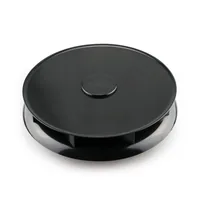
Air moving over a roof does two things: it pushes against anything sticking up, and it creates low pressure just behind it. The Turbo II and Turbo III use the first effect. Angled vanes catch the airflow and spin the cowl on two ball bearings; the spinning head works like a small centrifugal fan, flinging air outward and drawing replacement air up through the roof. The faster you drive, the more it extracts.
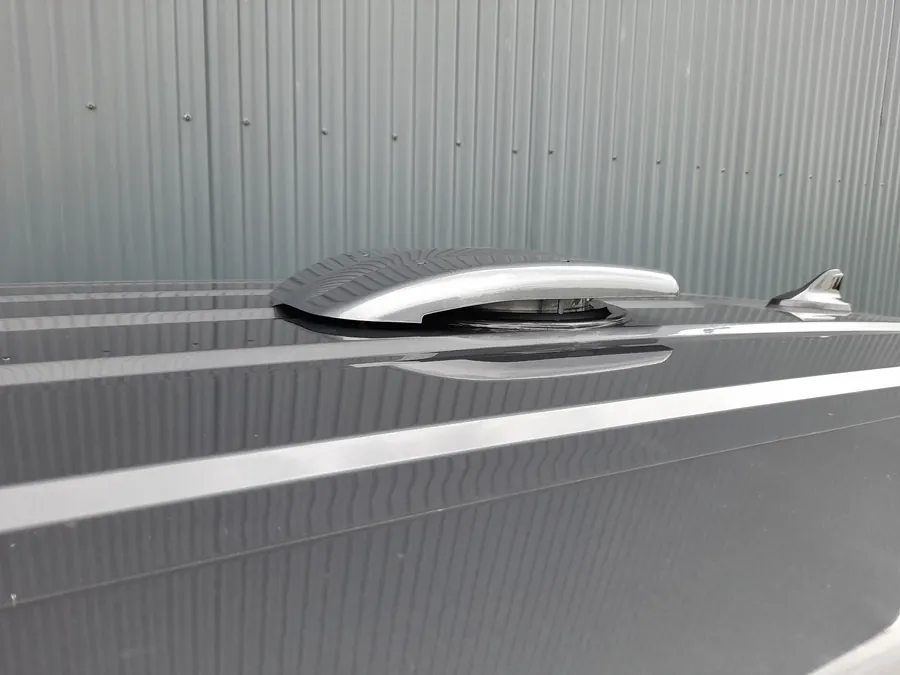
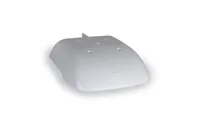
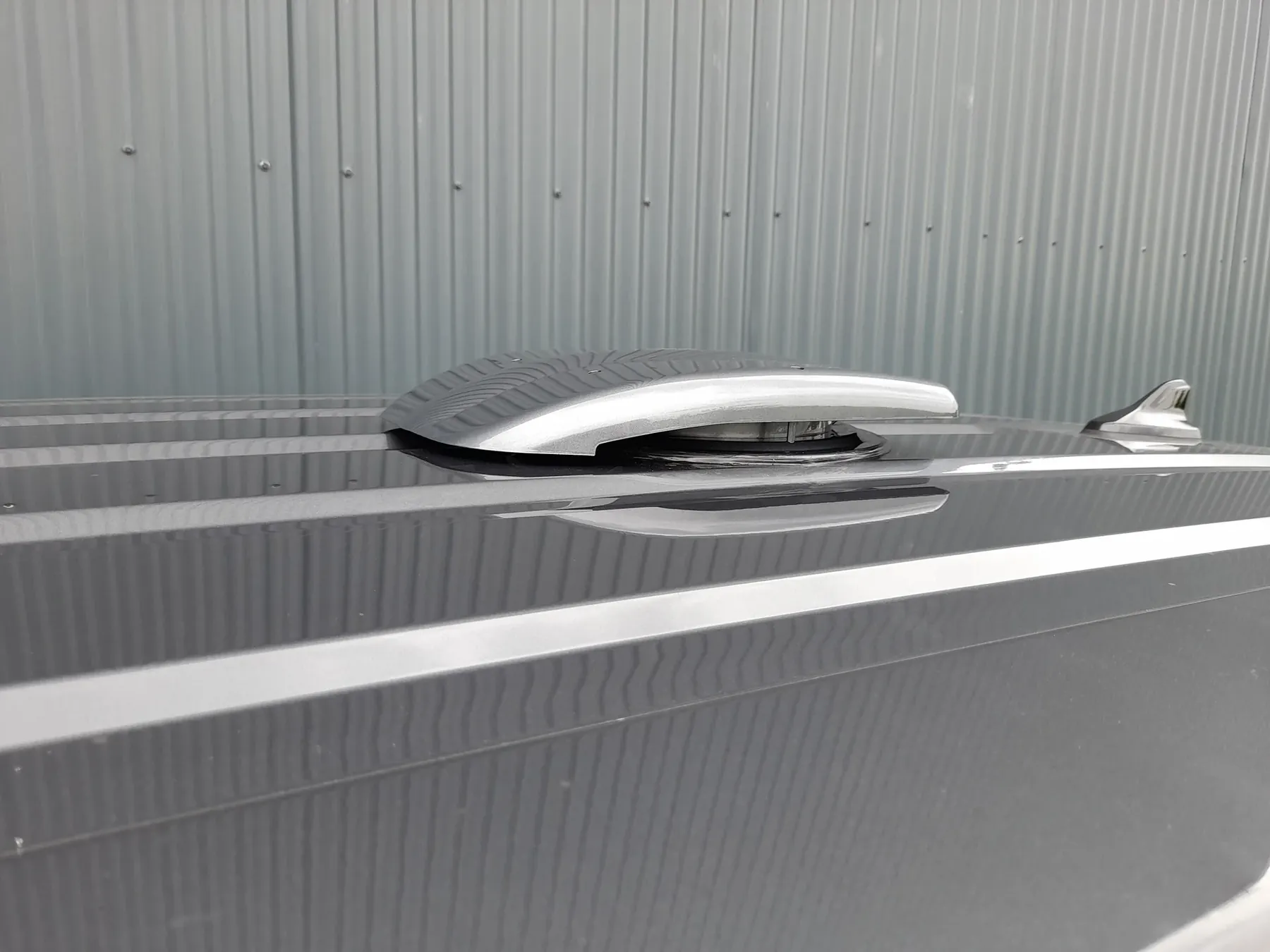
The exhaust ventilator uses only the second effect. Its low hood accelerates the air over the opening and the resulting pressure drop sucks air out of the body. Nothing spins, nothing wears, nothing makes a sound. It moves less air than a rotating cowl, but it is the only one of the three that is maintenance-free for the life of the vehicle.
The limitation of all three is the same: parked in still air, they extract very little. A cowl turns in a breeze and a venturi vent lets warm air rise out, but neither replaces a powered fan if anything living waits inside a stationary vehicle. If that is your use, look at the Le Mans and its brushless sibling instead, or fit one of each.
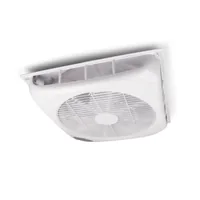
Turbo II, Turbo III and the exhaust ventilator side by side
Airflow for the rotating units is quoted at 100 km/h; at 50 km/h expect roughly half. All three come in white or black and draw no power.
| Specification | Turbo II | Turbo III | Exhaust ventilator |
|---|---|---|---|
| Principle | Rotating cowl, wind-driven | Rotating cowl, wind-driven | Venturi, no moving parts |
| Airflow | approx. 245 m³/h at 100 km/h | approx. 120 m³/h at 100 km/h | speed-dependent, lower |
| Roof cut-out | 128 mm | 80 mm | up to 140 mm |
| Outer size | 319 mm diameter | 210 mm diameter | 285 x 185 mm |
| Height above roof | 68 mm | 59.5 mm | 50 mm |
| Installation depth | 26 mm | 14.5 mm | minimal |
| Roof thickness | 1 to 21 mm | 1 to 17 mm | most sheet and GRP roofs |
| Weight | 1.2 kg | 0.55 kg | 0.5 kg |
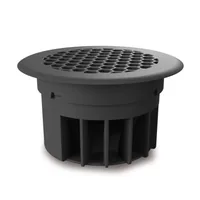
| Interior finish | Grille and closable shutter included | Grille and open/close valve included | Small 140 mm grille, ordered separately |
| Price excluding VAT | 90 euro | 80 euro | 55 euro |
The Turbo II moves about twice the air of the Turbo III, needs a hole 48 mm larger and stands 8.5 mm taller. The exhaust ventilator is the cheapest, the lowest and the quietest, at the cost of airflow.
When the Turbo II is the right choice
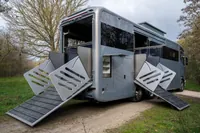
The Turbo II is the unit for a large body or a load that produces moisture and smell. Roughly 245 m³/h at motorway speed changes the air in a 10 m³ load area more than twenty times an hour, enough to keep a horse trailer, livestock box or dog van fresh between stops and to stop condensation forming on a cold roof.
Its 319 mm cowl sits only 68 mm high, low enough to clear most roof racks and ladder bars. The UV-stabilised ABS will not chalk or crack and the two ball bearings keep it spinning freely for years. The mounting set covers roof thicknesses from 1 to 21 mm, so it fits a bare steel van roof, a GRP trailer roof and an insulated box body.
Inside, it comes with a grille and a closable shutter, so on a winter morning you shut the vent from below instead of letting cold air pour in. Fit it towards the rear of the roof, where warm air collects, and pair it with a 129 mm floor ventilator to give the extracted air a low inlet.
When the Turbo III or the exhaust ventilator is the better fit
The Turbo III is the answer where the space is small or the roof is awkward. An 80 mm cut-out is one hole saw, the installation depth is 14.5 mm and no glue is needed, which makes it a fifteen-minute retrofit on a van that is already fitted out. At 120 m³/h it is plenty for a small dog box, a toilet compartment, a tool locker, a kennel trailer or a truck cab, and it makes a sensible second vent alongside a Turbo II.
The 80 mm hole is also the cut-out used by the Winglet mini fan, the 3 W powered extractor. Fit a Turbo III now, and if the compartment later needs air while parked, the Winglet drops into the same hole. The 80 mm floor ventilator is the matching inlet.
The exhaust ventilator is for anyone who wants stale air gone and never wants to think about the vent again. With no moving parts it cannot seize, rattle or wear, and its 50 mm profile is the lowest in the range. It suits refrigerated bodies, service vans carrying solvents, and boats as a permanent trickle vent. The opening can be anything up to 140 mm, so it often covers the hole from a previous vent. Finish it inside with the small 140 mm grille.
Fitting notes that apply to all three
Because these units rely on air moving over the roof, position matters more than for a powered fan:
- Mount in the rear third of the roof, where the roof is highest and the air is cleanest. A cowl at the very front sits in disturbed air off the cab and spins less than you expect.
- Keep a hand's width clear of roof bars, solar panels and deflectors. Anything upstream that shadows the cowl reduces airflow.
- Check roof thickness before ordering: 1 to 21 mm for the Turbo II, 1 to 17 mm for the Turbo III. Thicker roofs need a longer set, supplied on request.
- Give the air a way in. A floor ventilator or a low grille at the other end of the body doubles the effect of any roof extractor.
- Close the shutter in winter and when washing. The cowls shed rain at road speed, but a pressure washer aimed at the head will find a way in.
All three ship with a mounting set and, for the Turbo II and III, a saw template. A 128 mm or 80 mm hole saw and a cordless drill are the only tools you need.
Which one to order
Order the Turbo II for horse trailers, livestock boxes, dog vans occupied only on the move, tool vans and any body of 8 m³ or more where moisture or smell is the problem. It is the highest airflow available without a motor.
Order the Turbo III for small compartments, thin or awkward roofs, quick retrofits and as a second vent. Its 80 mm hole can take a Winglet powered fan later.
Order the exhaust ventilator where you want the lowest profile, silence and zero maintenance, and airflow is a nice-to-have rather than a must.
And if the vehicle will ever sit parked with a dog, a horse or a person inside, add a powered fan. A wind-driven vent is superb on the road and honest about its limits at a standstill. We are an independent European specialist retailer with all three in stock in the Netherlands, and any of them ships within 24 hours.
Frequently asked
Do wind-driven ventilators work when the vehicle is parked?
Only a little. A rotating cowl turns in any breeze and a venturi vent lets warm air rise out, so a parked vehicle stays fresher than one with no vent. But neither moves useful air in still conditions. If anything living waits inside a parked vehicle, fit a powered fan such as the Le Mans LL or the Winglet.
Will a Turbo II let rain in at motorway speed?
No. The cowl overhangs the opening and the spinning head throws water outward, so rain at road speed stays outside. Close the interior shutter when washing the vehicle and do not aim a pressure washer directly at the head.
Can I replace an old mushroom vent with the Turbo II?
Usually, yes. The Turbo II needs a 128 mm hole and its cowl covers 319 mm, which is larger than most older vents, so it will normally cover the old fixing holes. If the existing hole is larger than 128 mm, the exhaust ventilator with its 140 mm maximum opening may be the easier swap.
Is the Turbo III just a smaller Turbo II?
In principle, yes: the same rotating cowl on ball bearings, scaled down to an 80 mm cut-out and 210 mm diameter. It moves about half the air, weighs less than half as much and installs without glue. Its 80 mm hole is shared with the Winglet powered fan, so it can be upgraded later.