







Why boats get damp, and why it gets worse when you leave
A boat is a cold shell full of warm, wet air. The hull sits in water that is nearly always cooler than the cabin, so every surface below the waterline, and most of the ones above it, is a condensing surface. Cooking, showering, wet oilskins and two people breathing all add moisture, and when you lock up on Sunday evening and leave the boat until Friday, that moisture has nowhere to go. It condenses in the lockers, under the bunk cushions and along the hull lining, and by the time you come back the cabin smells the way every boat owner recognises.
The answer is not a dehumidifier plugged into shore power, or at least not only that. It is a small but continuous exchange of air, in through one opening and out through another, that carries the moisture out before it settles. On a boat that means thinking about two situations separately: when you are aboard and have power, and when you are not.
Powerless options for the days you are not aboard
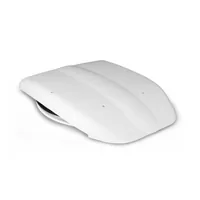
The most useful ventilation on a boat is the kind that works with nobody there. A wind-driven rooftop extractor such as the Turbo II has a rotor that turns in whatever breeze crosses the deck or coachroof, and it draws air up out of the cabin as it spins. There is no wiring and no battery drain, and a boat at a mooring nearly always has some wind over it. It needs a 128 mm cut-out. The Turbo III does the same job on an 80 mm hole where deck space is tight.
The exhaust ventilator is even simpler. It is a passive venturi cowl with no moving parts at all. Air moving over the housing creates a slight low pressure that pulls air out from below. It will not move as much as a spinning rotor in a strong breeze, but it has nothing to seize, nothing to wear and nothing to be fouled by salt. For a locker or a heads compartment that just needs to breathe while the boat sits, it is hard to beat.
Both need an inlet somewhere else for the air they extract. On most boats the companionway washboards, a dorade or a cracked-open forehatch provide it, but if the boat is sealed tight, fit a small closable grille low in the cabin so that the extractor has something to pull.
Galley and heads: extract at the source
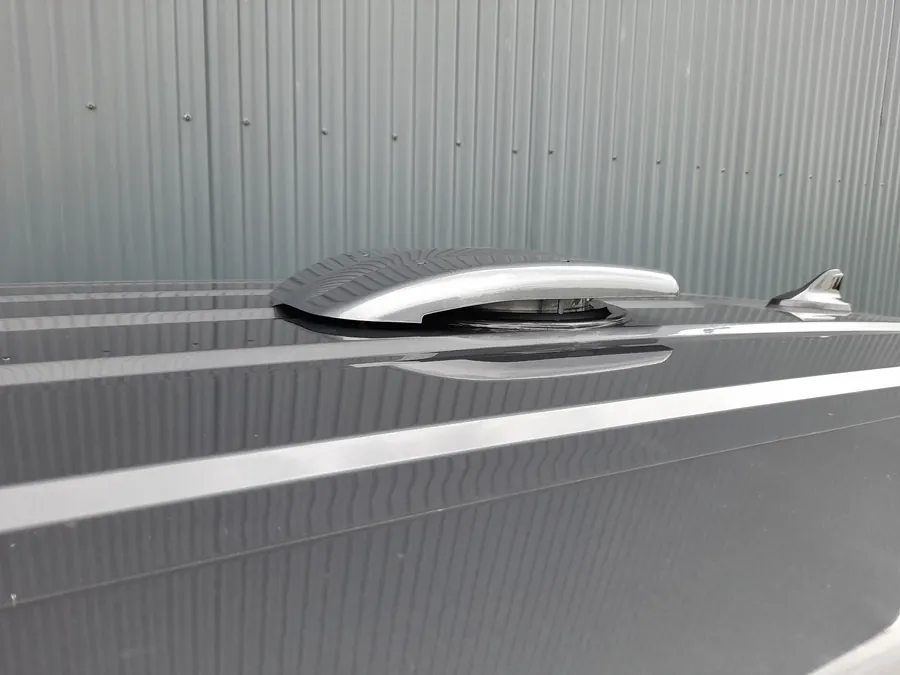
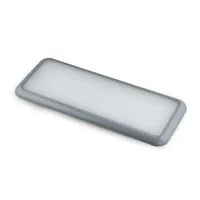
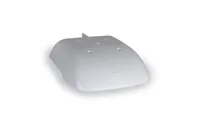
When you are aboard and cooking, the moisture comes in bursts, and the way to deal with a burst is to extract it where it happens. A small powered fan directly above the galley or in the heads catches steam before it spreads through the boat. The Winglet is the unit we suggest for this: a compact rooftop ventilator moving around 65 cubic metres of air an hour through an 80 mm cut-out, which suits the low headroom and small deck areas of a cruising yacht or motor cruiser.
That figure sounds modest next to a motorhome fan, and it is meant to. A heads compartment is a couple of cubic metres and a galley not much more. You want to clear it several times an hour, not create a gale. Fit the Winglet on its own switch by the galley so that it goes on with the hob and off when the pans are washed up. If you have more headroom and a larger saloon to clear, the Le Mans LL on a 230 mm cut-out is the next step up.
Lockers and cabins: interior valves and grilles
Dampness on a boat lives in the closed spaces: hanging lockers, the space under the V-berth, the cockpit locker where the fenders live. A locker with a solid door is a box within a box, and it stays wet long after the cabin has dried. The fix is to give every enclosed space a way for air to move through it, and a way to close it when you do not want the cold coming in.
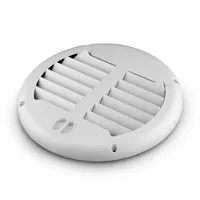
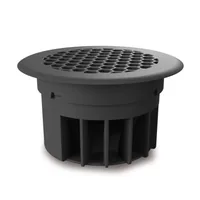
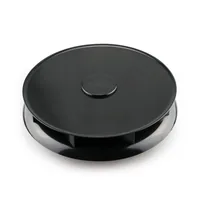
An interior valve such as the V12 is a round, closable vent that fits a locker door, a bulkhead or a bunk front. Open, it lets the cabin air circulate through the space. Closed, it seals. Fit one low and one high in a hanging locker and the locker ventilates itself by convection. The Flower Power valve does the same with a rotating shutter and a slightly more decorative face, which some owners prefer in a saloon. Where you never need to close the opening, a plain grille costs less and has nothing to break.
Under bunk cushions, a row of grilles in the bunk front lets air get to the underside of the mattress, which is where most of the mildew on a boat starts. It is a cheap afternoon's work with a hole saw and it makes a real difference.
Corrosion-conscious choices
Salt air finds every mild-steel screw and every unprotected aluminium edge. When choosing ventilation for a boat, look at the whole part, not just the housing. As a rule of thumb, prefer plastic housings that will not corrode, stainless steel fixings throughout, and designs where the moving parts are protected from spray. A rotor that spins on a bearing needs to be rinsed with fresh water now and then, and it will thank you for a drop of light oil at the start of the season.
Think about where the unit sits on deck, too. A rooftop ventilator that is perfectly happy on a motorhome roof is being asked to survive green water on a foredeck. Mount extractors on the coachroof or over the cockpit rather than forward, and choose the lowest profile that gives you the airflow you need. If you are unsure whether a particular unit is suited to a particular position, ask us before you order. We would rather tell you no than sell you something that ends up in the bilge.
Power aboard: when you have it, use it wisely
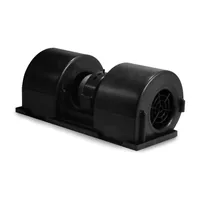
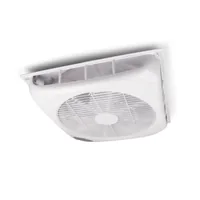
With batteries and no shore power, every watt counts, and this is where a brushless fan earns its place. The Le Mans LL draws around 34 watts at full output while moving between 515 and 565 cubic metres of air an hour, and a great deal less at low speed. Left running on low overnight in a saloon, it keeps the cabin dry and cool without making a noticeable dent in a decent service battery, and it is quiet enough to sleep under.
Wire it through a speed controller and put the control where you can reach it from the bunk. On a boat the temptation is always to switch everything off to save power. A fan you can turn down instead of off is a fan that gets used.
A sensible plan for a small cruiser
For a typical family cruiser we would suggest this order of priority. First, a passive or wind-driven extractor over the heads or aft cabin, because it works all week for nothing. Second, closable valves or grilles in every locker and under every bunk. Third, a small powered fan over the galley. Fourth, if the budget and the battery allow, a brushless fan over the saloon for nights aboard. Each step works on its own, and they add up.
Our marine ventilation page lists what we recommend for boats in one place. As an independent European specialist we ship everything from our own stock in the Netherlands, and if you send us a photo of the coachroof and the cut-outs you already have, we will tell you what fits without new holes.
Frequently asked
Can I fit a vehicle rooftop ventilator to a boat?
Yes, with some care. Choose a unit with a plastic housing and stainless fixings, mount it on the coachroof or over the cockpit rather than on the foredeck, and rinse it with fresh water now and then. Ask us if you are unsure about a particular position.
What is the best way to ventilate a boat when I am not on it?
A wind-driven or passive venturi extractor, because it works without power. Pair it with a small inlet low in the cabin so that the extractor has air to pull, and leave locker valves open when you leave.
How do I stop lockers smelling musty?
Give every locker a way for air to move through it: a closable valve or grille low and high in the door or front. Under bunks, a row of grilles in the bunk front lets air reach the mattress, which is where mildew usually starts.
Will a roof fan drain my battery overnight?
A brushless unit such as the Le Mans LL draws around 34 watts at full output and much less on low. Run overnight on a low setting it is a small load for a healthy service battery.